How Do You Protect Your Car's Paint Through an Ontario Winter?
How to protect your car's paint through an Ontario winter: wax vs sealant, clay bar prep, how often to wash off salt, and why stone chips matter.
The short answer: put a layer of protection (wax or a paint sealant) on clean, decontaminated paint before the snow arrives. Then wash off road salt regularly all winter, underneath as well, and cover stone chips before they rust.
Here's what each step does, how long protection actually lasts, and when it's worth getting help.
How do you protect your car paint in winter?
Clean the paint, clay it if it feels rough, add wax or sealant before the snow, then wash off salt regularly, including the underbody.
Think of it in two parts. Before winter, you're putting a barrier between the clear coat and everything Ontario roads throw at it. During winter, you're stopping salt from sitting on the car for weeks at a time. Protection without washing wears off fast, and washing without protection leaves the paint with nothing on it. You need both.
Why is winter so hard on car paint?
Road salt speeds up rust, grit scratches paint when it's scrubbed, and stone chips expose bare metal for salt and water to attack.
Consumer Reports notes that salt accelerates rust, and that the damage can reach brake, steering, suspension and fuel system parts, not just the body. Its detailing guide also lists road salt among the contaminants that can damage paint and leave it looking dull over time.
Then there's the grit. CAA North & East Ontario warns that a stiff scrub brush can grind salt and sand into the paint and scratch it. That's why we covered brushes in our post on what not to do when you wash your car. For sap, bird droppings and other stubborn marks, see the hardest things to clean off a car.
Wax or sealant: which protects car paint better?
Both work. Wax is simple but wears off within weeks. A synthetic paint sealant usually lasts longer, so it suits a long, salty winter better.
Wax. Consumer Reports says even the best waxes last only several weeks before the protective film wears off, and it recommends waxing even new cars every two or three months, or about once a season. CAA adds that wax forms a layer that repels water and snow, which also helps the car stay clean longer between washes.
Paint sealant. Sealants are made from synthetic polymers. The Drive explains that a sealant lasts longer and is more durable than wax, typically a few months and up to about six. Check the product label, since lifespans vary.
Ceramic and hybrid products. These are newer. A product maker quoted by Consumer Reports says they give "more resilient protection" than traditional wax. We don't apply ceramic coatings. The protection step in our packages is a paint sealant.
When should you protect your car's paint before winter?
Before the first big snowfall, on paint that's clean and completely dry. Consumer Reports points to late October as a good time to do it.
Consumer Reports suggests the week before Halloween as a good time to wax. Whatever you use, put it on clean paint. Its detailing guide says to work on cool paint out of direct sun, test on a hidden spot first, do one small section at a time and buff once it hazes. It also says to keep wax off plastic trim, because the residue is hard to remove.
If you're also tackling the inside before winter, our fall car detailing checklist covers mats, carpets and glass.
Do you need a clay bar before waxing or sealing?
If washed paint still feels rough or gritty under your fingers, yes. Clay lifts bonded contamination so the wax or sealant sits on clean paint.
Washing doesn't remove everything. Jalopnik lists hard water stains, brake dust, overspray, tree sap and iron fallout among the contaminants that stay bonded to the paint after a wash. Its simple test: put your hand in a thin plastic bag and glide it over clean paint. If it feels textured, the paint needs claying. Freshly clayed paint should then get protection, such as a sealant or wax.
Clay is never used on dry paint, and a dropped piece should be thrown away because it picks up grit. If you'd rather not do it yourself, our Deep Full Detail includes a clay bar treatment and a paint protection sealant. You can also add a Clay Bar Treatment (+$20) to an exterior detail. See all packages and add-ons on our services page.
How often should you wash your car in winter?
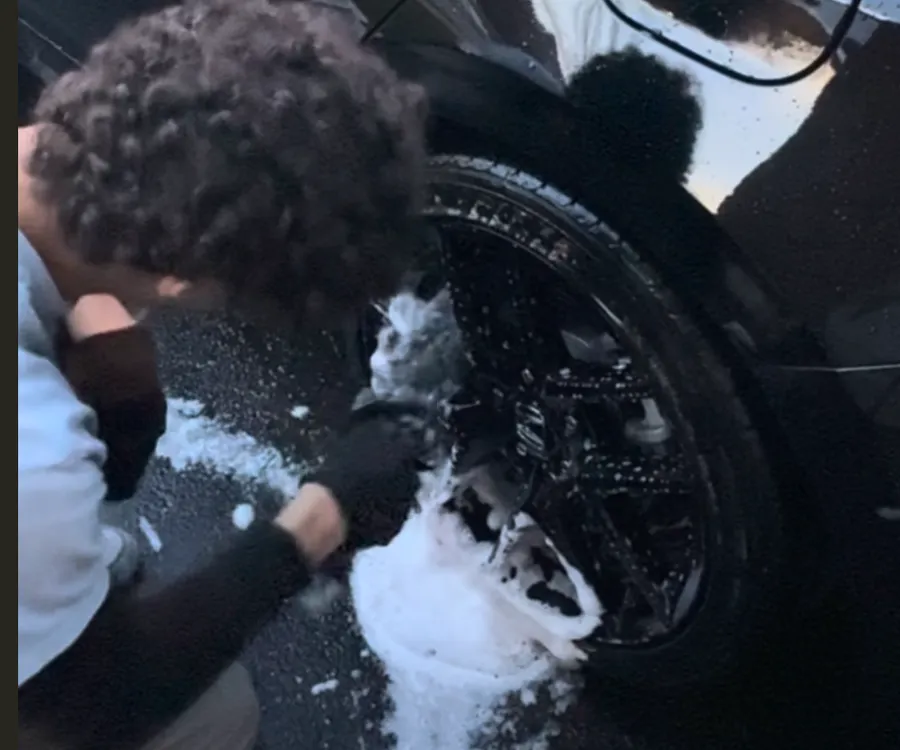
Consumer Reports suggests at least once a month during snow season, and more often when the car is coated in salt. Include the underbody.
The same Consumer Reports article recommends a wash that cleans the whole car, including the undercarriage, and calls the underbody spray a worthwhile upgrade for removing salt. The Drive calls regular washing the simplest way to avoid rust and points to rocker panels, inner fenders and strut towers as rust-prone areas.
Two winter-specific cautions from CAA North & East Ontario: avoid very hot water, which can melt protective wax and widen small cracks in glass, and dry the car well so doors and seals don't freeze. Salt ends up inside too. Our salt stain removal guide covers carpets and mats.
What should you do about stone chips?
Cover any chip that shows bare metal as soon as you can. A small rust spot on a chip can grow into a bigger one over a salty winter.
The Drive warns that a little rust on a stone chip can turn into a larger rust spot, and eventually a hole. Its advice is to dab touch-up paint on each spot (after sanding, a prep cleaner and a rust-fighting primer) rather than repainting a whole panel. It also says touch-ups should be done before a sealant goes on, because the sealant is meant to bond to the paint. Detailing cleans and protects paint. It doesn't repair chips, so do touch-ups first or have a body shop look at deeper damage.
Can a mobile detailer protect your paint before winter?
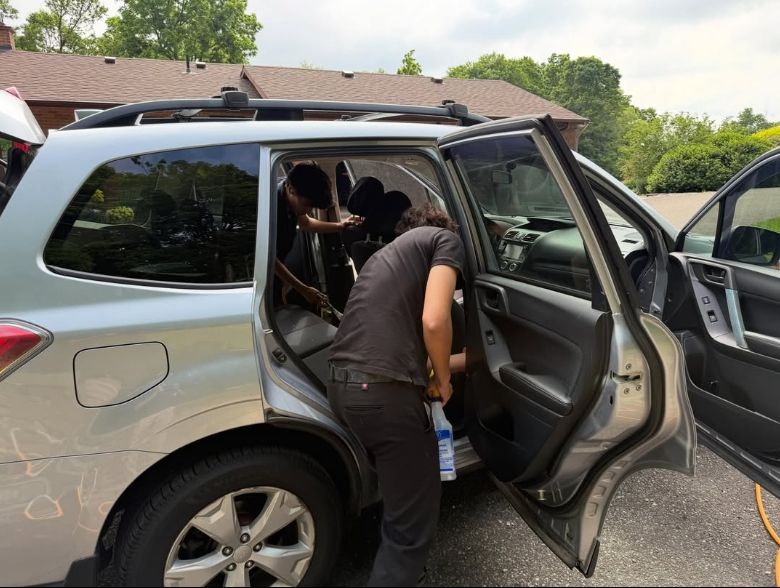
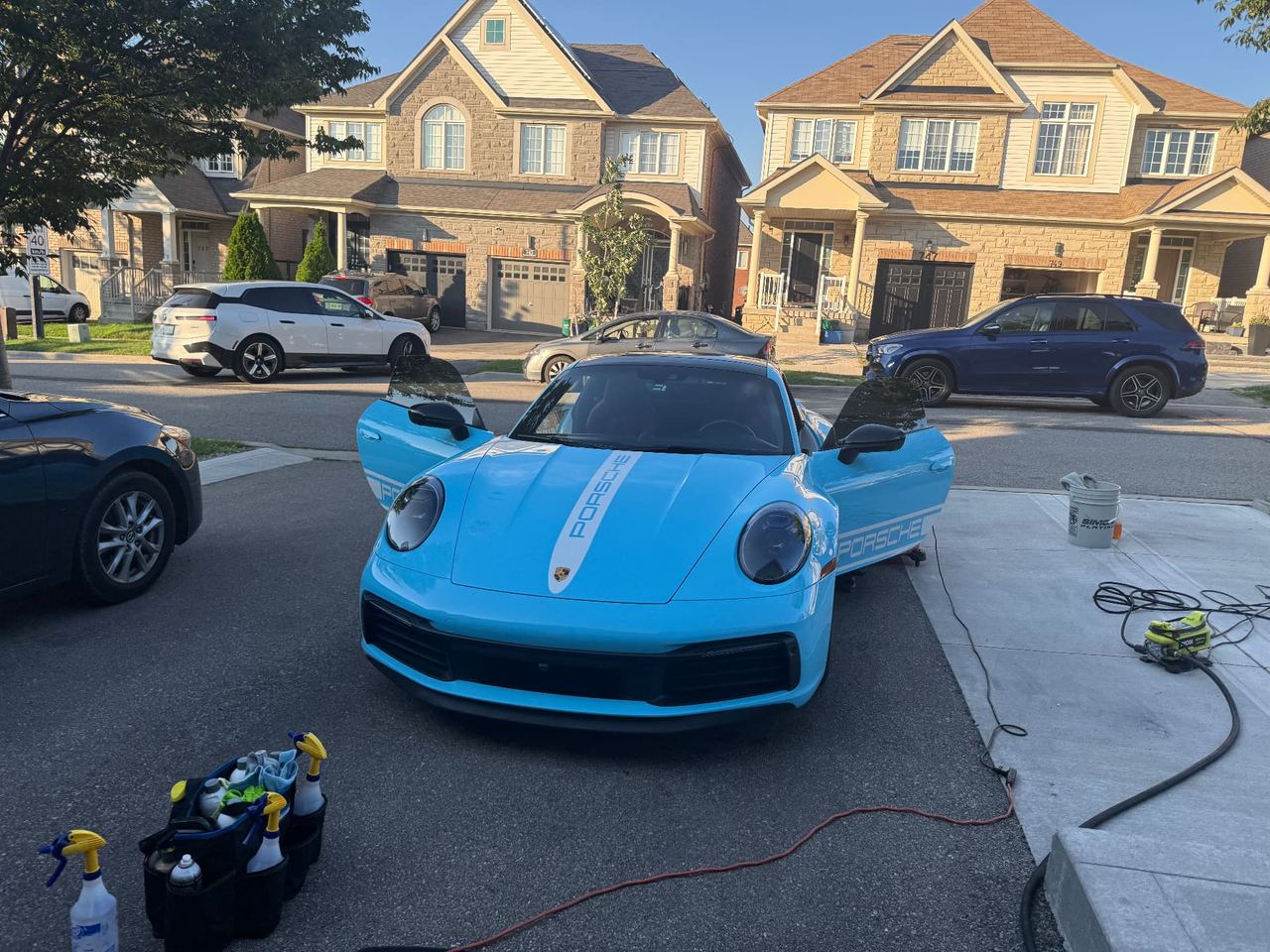
Yes. Our Deep Full Detail includes a clay bar treatment and paint protection sealant, done in your driveway in one visit of about 3 to 4 hours.
Polish & Go is a fully mobile detailer based in Milton. We come to you in Milton, Campbellville, Oakville, Georgetown, Halton Hills, Burlington, Mississauga and Brampton, from 9 a.m. to 9 p.m. every day.
- [Deep Full Detail](/full-car-detail-milton): deep interior cleaning (including salt stain removal) plus a full exterior wash, clay bar treatment and paint protection sealant. $165 sedan, $185 SUV, $190 truck, $220 van.
- [Exterior Detail](/exterior-car-detailing-milton): from $60 for a sedan ($70 SUV or truck, $80 van), about 1 hour. Add a Clay Bar Treatment for +$20.
- Premium Revival: everything in the Deep Full Detail plus bug, tar and iron decontamination and a finishing paint protection step. From $225 sedan.
We use your water and power, so please confirm water and power access when you book. If the weather may affect an exterior job, check arrangements with us when you book. See our FAQ for more on how mobile visits work, or book your detail.
Need a Milton detailer?
Polish & Go comes to your driveway. Book your detail in under a minute.