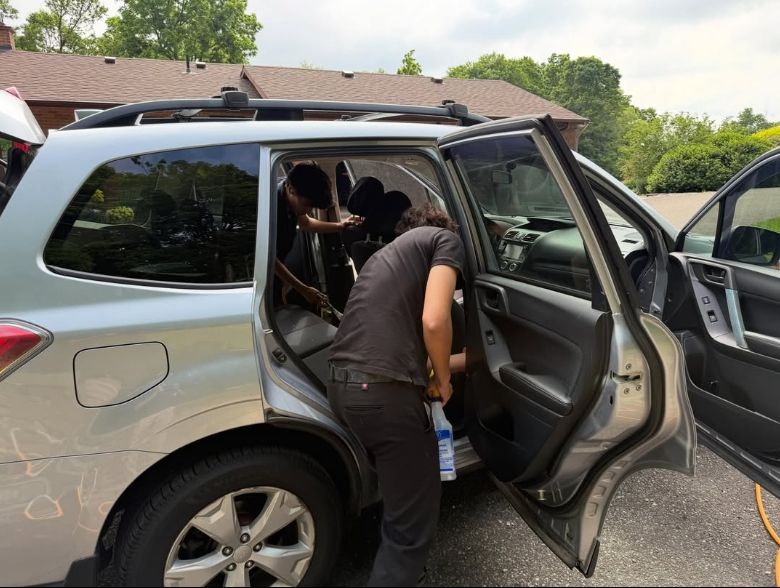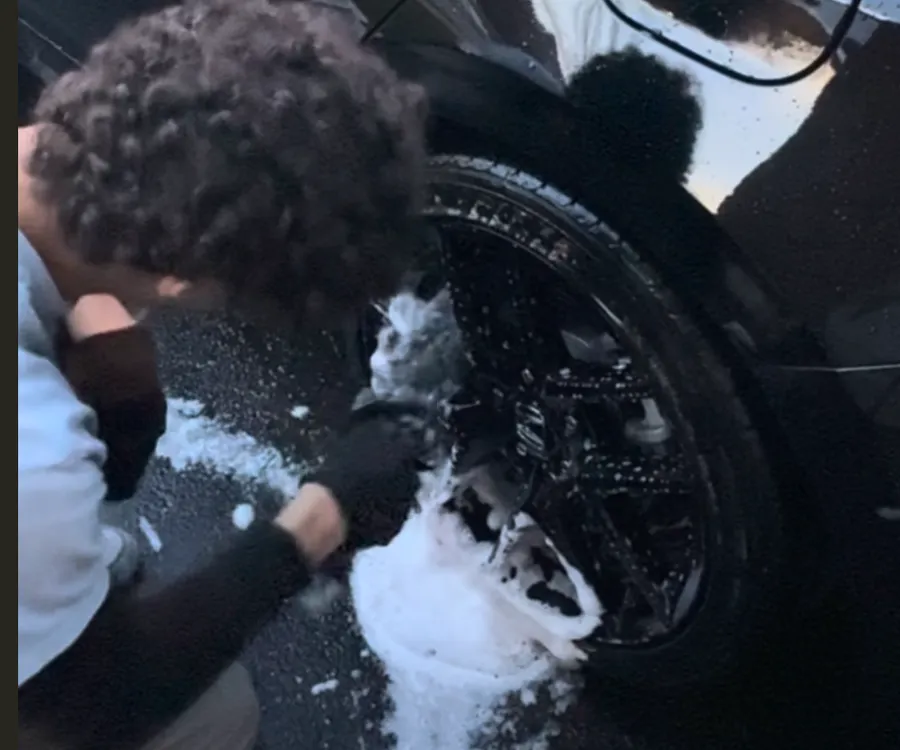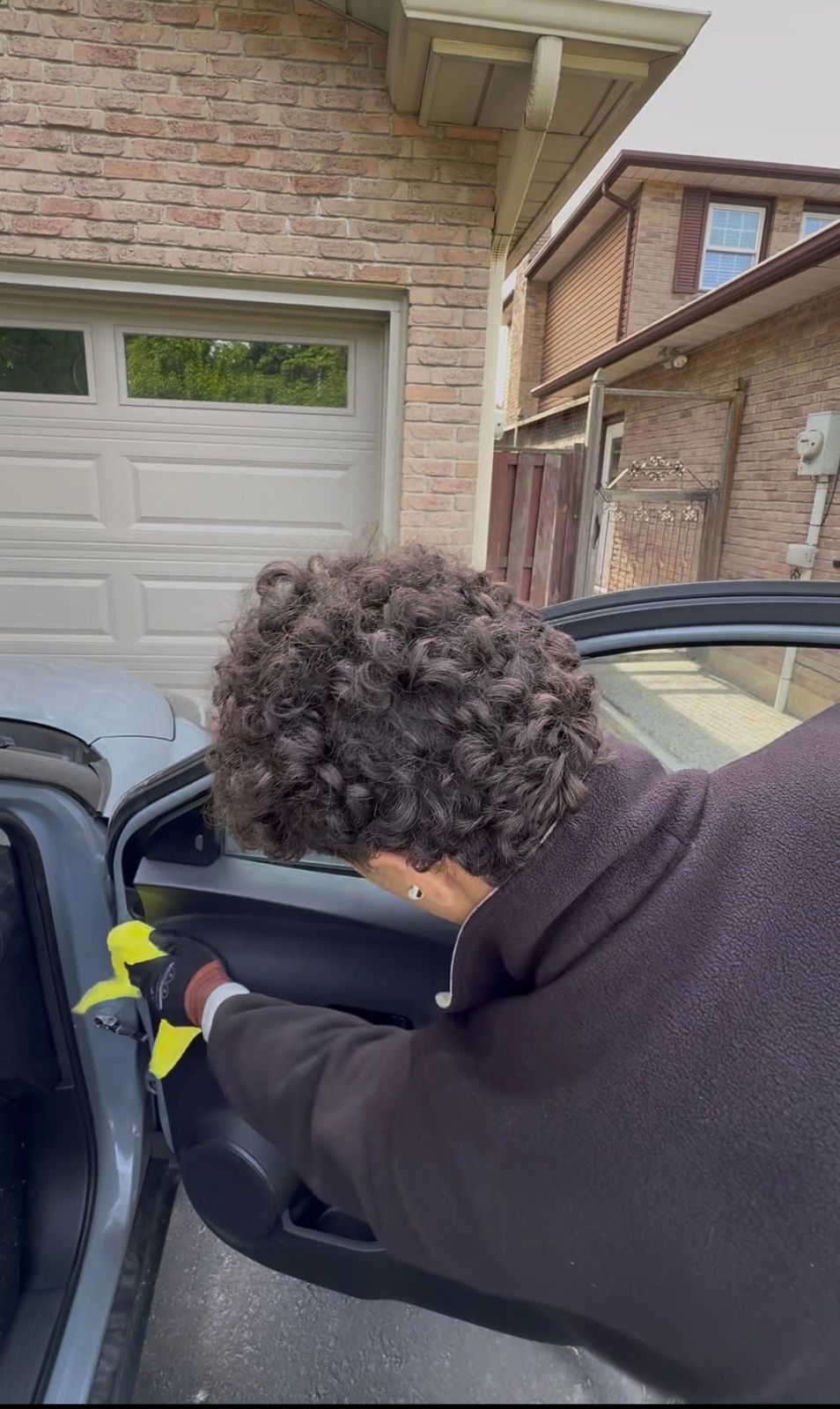
What Not to Do When Cleaning Your Car's Interior
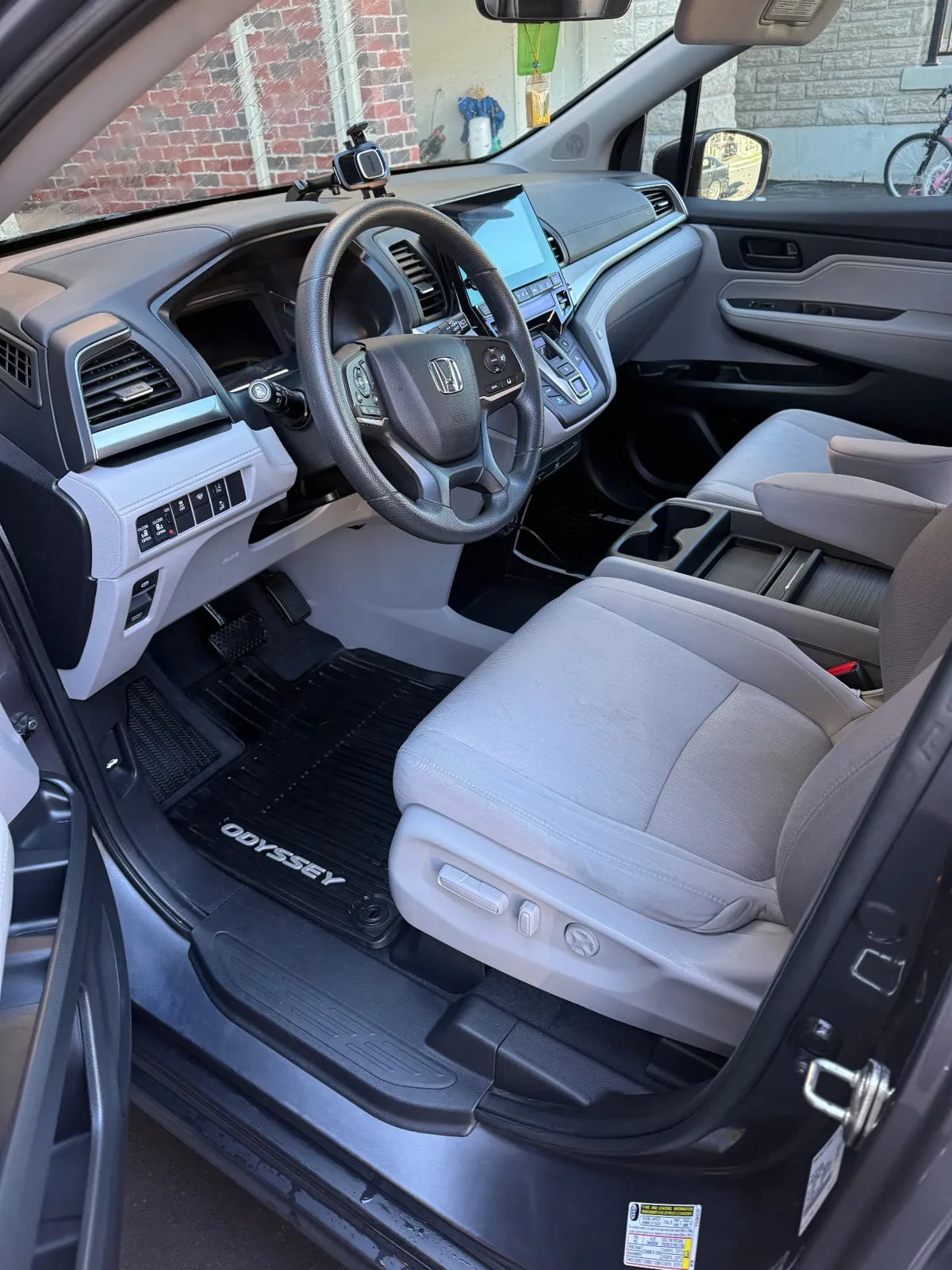
Household cleaners, soaked carpets, sprayed touchscreens and ammonia on tinted glass: the car interior cleaning mistakes to avoid, and what to do instead.
The short answer: don't use household cleaners, don't spray anything onto the touchscreen, don't use ammonia glass cleaner on tinted windows, don't soak the carpet, and never mix cleaning products. Use products made for cars, a light touch, and as little water as you can.
These are the interior mistakes that cause the most damage, why they matter, and what to do instead. For the outside of the car, see our post on what not to do when you wash your car.
What should you avoid when cleaning a car interior?
Avoid household cleaners, sprays on screens, ammonia on tinted glass, soaked carpets, mixed chemicals and glossy dash sprays. Each one can damage a surface or make the car less safe.
The rest of this post goes through each one. The common thread comes from Consumer Reports, whose auto testing team says household products aren't made for the finishes in modern cars. Car interiors mix soft-touch plastics, coated screens, leather, fabric and tinted glass in a small space, and each one needs a gentler approach than a kitchen counter.
Can you use household cleaners inside a car?
It's best not to. Household cleaners aren't made for car finishes and can damage plastics, leather, screens and coatings. Use an automotive interior cleaner and microfibre cloths instead.
Consumer Reports recommends an automotive interior cleaner for the dash and trim, wiped off with a second clean microfibre cloth, and isopropyl alcohol on a cloth for sticky residue. It also warns against paper towels, which can leave streaks, and dirty cloths, which can scratch.
Bleach is a particular one to avoid. It can discolour fabric and carpet, and as you'll see below, it's dangerous to mix with other cleaners.
Should you spray cleaner on your car's touchscreen?
No. Spraying any cleaner onto an infotainment screen can damage its anti-glare or anti-fingerprint coating. Wipe it gently with a clean, dry microfibre or eyeglass cloth.
That's Consumer Reports' advice. It's worth checking your owner's manual too, since some manufacturers give their own instructions for screens. Whatever you use, put it on the cloth, never directly onto the screen or the buttons around it, so liquid doesn't run into the gaps.
Can you use ammonia glass cleaner on car windows?
Not on the inside. Many household glass cleaners contain ammonia, which can damage window tint. Use an ammonia-free automotive glass cleaner and a clean microfibre cloth.
AAA warns that ammonia-based cleaners can damage window tint, and Consumer Reports recommends an alcohol-based, ammonia-free automotive glass cleaner for the windshield. If your windows were tinted after you bought the car, follow the installer's care instructions as well.
Clean glass matters more than it seems in winter. A greasy film on the inside of the windshield adds glare and makes fogging harder to clear. Our post on why car windows fog up inside in winter covers that in detail.
How wet should you get car carpet and seats?
Barely damp. Soaking carpet or seat fabric can lead to mould and musty smells. Use a lightly dampened cloth, then air the car out so it dries.
Consumer Reports recommends spraying stains lightly with a carpet cleaner, rubbing gently with a damp microfibre cloth, and leaving the windows open afterwards. It specifically warns against soaking the carpet.
The problem with soaking is that car carpet sits on padding over a metal floor, and water that gets under it can stay there. That's why professional detailers use extraction: a machine sprays cleaning solution in and sucks the dirty water straight back out, so the carpet doesn't stay wet. Our guide to steam cleaning vs shampoo extraction explains how the two methods differ.
Is it safe to mix cleaning products in your car?
No. Never mix bleach with other cleaners. Bleach mixed with ammonia or acids such as vinegar can release toxic gas, which is even more dangerous in a closed car.
Health Canada warns that it's never safe to mix bleach with other cleaning products. Bleach can react with products containing ammonia or acids, including vinegar, to produce chloramine gas, which can cause burning eyes and light-headedness and can be deadly. Health Canada also advises ventilating during and after cleaning, and reading and following product labels.
A car cabin is a small, enclosed space, so this matters more than in a kitchen. Use one product at a time, keep the doors open while you work, and rinse or wipe a surface before switching products.
How should you clean leather car seats?
Gently. Vacuum the seams, wipe with a soft damp cloth and a mild leather cleaner, then condition. Scrubbing hard can strip the leather's protective coating.
Consumer Reports suggests vacuuming crumbs out of the seams first, wiping with saddle soap on a soft, damp cloth, scrubbing gently, and following up with a leather conditioner so the leather doesn't dry out. Leather cleaning and conditioning is part of our Deep Interior Clean.
Should you use shiny spray on the dashboard?
It's better not to. Glossy detailing sprays on vinyl dash trim can cause glare on the windshield. Clean the dash with an interior cleaner and wipe it dry instead.
That warning comes from Consumer Reports. A shiny dash may look nice in the driveway, but the reflection in the windshield is a distraction when you're driving into a low winter sun. Keep any dressing off the steering wheel and pedals as well, where a slick surface is the last thing you want.
How should you clean a child's car seat straps?
Follow the car seat manual. Most makers say not to bleach, machine wash or soak the harness straps, because that can weaken them. Spot clean with mild soap and water.
For example, Britax says not to machine wash, iron or bleach the harness webbing, not to submerge the straps, and to spot clean them with warm water and mild soap. Other brands have their own instructions, so check the manual for your seat. If a seat needs to come out for cleaning, re-install it exactly as the manual says. Transport Canada's child car seat safety page has installation help.
Should you leave winter salt until spring?
No. Salt dries into white rings in the carpet and gets harder to remove the longer it sits. Shake out mats often and deal with salt stains during the season.
Good rubber mats with raised edges and channels help keep meltwater and salt off the carpet; NAPA's winter interior guide notes that flat, cheap mats let water get everywhere anyway. Shake them out regularly and vacuum the carpet around them. Our step-by-step guide to removing winter salt stains from car carpet covers the home method. Salt stains are one of the problems we see most often on Milton cars, and salt stain removal is included in our Deep Interior Clean.
When should you call a detailer instead?
Call one when stains, smells or salt keep coming back, when fabric needs extraction, or when you'd rather not risk the wrong product on leather, screens or tint.
A regular vacuum and wipe-down at home is a good habit. The jobs that are hard to do well without the right equipment are carpet and seat extraction, set-in odours and dried salt. Our interior car detailing page explains our interior packages, and our services page compares them side by side. If the outside needs work too, our Deep Full Detail covers both, from $165 for a sedan.
Polish & Go is a mobile detailing service based in Milton, also serving Campbellville, Oakville, Georgetown, Halton Hills, Burlington, Mississauga and Brampton. We work 9 a.m. to 9 p.m. every day. Book online, read our FAQ, or call 519-835-5580.
Need a Milton detailer?
Polish & Go comes to your driveway. Book your detail in under a minute.